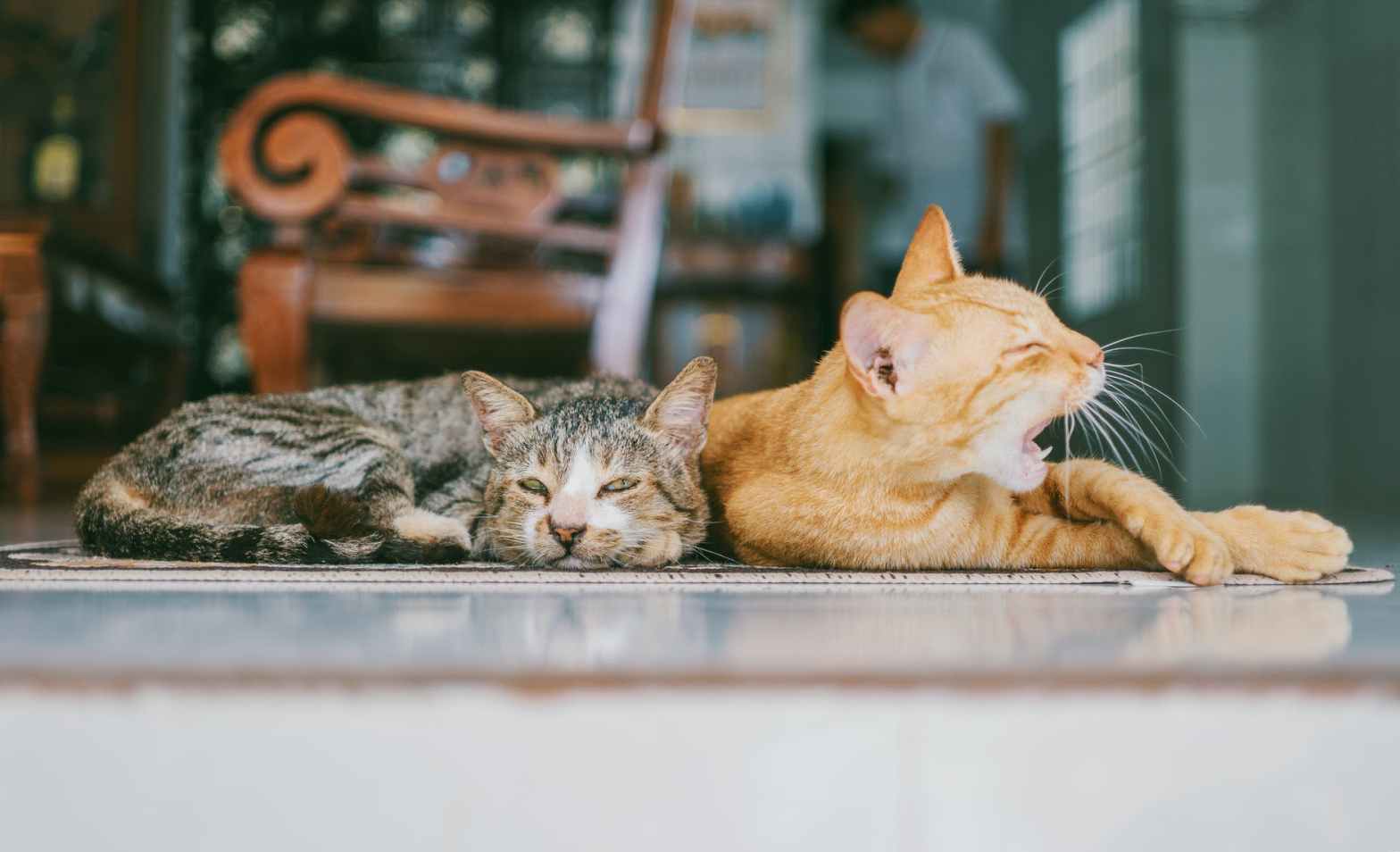
Should I get a second cat?
It is important to think carefully before getting another cat. Cats are a solitary species, meaning they don’t necessarily need ‘friends’ to be happy. Your time, play and an understanding of your cat’s needs are usually enough. However, if you do want to get another cat, it is important to prepare carefully for their arrival and early days to give the best chance of the two cats getting along. You might find that some cats choose an individual cat for company, however, or even that some of your cats get along in the household. For more information on getting a cat when you’ve already got one at home.
Cats mostly prefer living on their own, but with some practical help, you can help your cats accept each other. It’s really important to look out for signs that cats aren’t getting on. Just because they are not physically fighting does not mean that they are happy together.
How to introduce cats
Many cats are returned to Cats Protection because they haven’t got on with the adopter’s other cat. But with some planning and taking it in stages, you can give them the best start.
- Setting up a sanctuary room – such as a spare bedroom – with everything a cat needs is a way to ensure your new cat has their own space and space to adapt to their new home.
- Next, scent swapping – collect scent from one cat using a cloth by wiping it around their cheeks or forehead and then give the other cat the cloth. Placing it in the middle of the floor gives them the option to investigate or ignore. This helps them to get used to each other’s smell.
- Once the cats are no longer reacting to each other’s scent, the next step is using a glass barrier such as patio doors. This allows them to see each other without being able to get to one another. Let the cats have the choice of approaching the glass rather than forcing them. If this goes well, use a mesh barrier or baby gate to allow them to see and smell each other.
- After plenty of mesh barrier introductions, it’s finally time for the face-to-face meeting. Again, it’s important to allow the cats the option of meeting and not force them to meet. Both cats need to know where they can exit the situation or where they can get up high. Keep these meetings short and make them a good experience with treats and toys. If things don’t go well, it’s important to ensure you can break any eye contact between the cats, allowing them to retreat from each other. It is important not to rush the stages, but following this guide gives your cats the very best chance of being able to live together. Good luck!
Signs of cat bullying and how to combat it
In any household with more than one cat, there is the potential for bullying. It’s important to spot the signs and take action as this can lead to stress-related illness.
Look out for;
- Staring
- Claiming resting places or access to owners by physically pushing another cat away
- Pouncing on another cat while they are asleep
- Blocking thoroughfares, sitting directly in front of the cat flap to deny entry/exit
- Blocking access to an indoor litter tray
How to combat bullying in a multi-cat household
- Provide all ‘cat resources’ – feeding areas, water bowls, litter trays, beds, toys, scratching posts, high perches and private places – in the formula ‘one per cat plus one extra, positioned in different locations’ to limit competition.
- Provide dry food for ‘grazing’ throughout the day or divide wet food into frequent smaller meals to avoid competition at set mealtimes. Position the bowls to enable each cat to eat without the need to turn his back on a potential adversary
- Provide indoor litter facilities, even if the cats have access outside
- Provide two separate entry and exit points to the property, ie cat flaps, doors or windows, to avoid the risk of guarding or blocking and enable even the most timid cat to get indoors and outdoors unhindered
Do you want another cat?
If you already have one or more cats, think carefully before getting another cat as it’s an important decision. There are many factors to consider. Can you afford the daily costs, including veterinary care for which big bills can be unexpected? Do you have enough space in your home to provide extra resources in the right locations to support another cat? Do you have enough time for another cat? Has your cat coped with the presence of other cats in the past?
While getting a new pet is exciting, remember that your senior cat may be stressed and need time and space to adjust to her new environment and pet parents. A little bit of patience and love will help both of you through the adjustment period.
Compiled sources include:
Cats Protection in the U.K.
Please note this was an informational research project to educate a friend & a new parent for proper senior cat care & adoption. I did not write most of this material, only gathered & now sharing it to help other cat parents.
To see the last Series “Rehoming A Cat”, start here.
To read the beginning of this series, “Welcome Home Your New Cat”, click here.
This concludes the “Rehome Cat” blog series.
Discover more from Impactful Revenue
Subscribe to get the latest posts sent to your email.
 Impactful Revenue